
Tag Archive | "Scotland"

Tennent Caledonian Breweries Launches £4 Million Bottling


Scotland’s most historic and successful brewery, Tennent Caledonian Breweries, has opened a new £4 million state-of-the-art bottling line at its famous Wellpark site in Glasgow. Situated within Wellpark’s 2000 square metre packaging hall, the new £4 million line gives Tennent Caledonian the largest and most technologically advanced beer bottling operation in Scotland, with the capacity to run 50,000 bottles per hour – for Tennent’s brands and for contract business that will now be attracted to Scotland from across the UK.

Tennent Caledonian, which is now part of cider and beer producer C&C Group, has been brewing for over 450 years. The site also houses Tennent’s Training Academy, a £1 million centre of training excellence for the pub and hospitality industry.

The launch of the bottling line is part of an ambitious plan of growth and development at Tennent Caledonian, resulting from an inward investment programme from C&C Group following its purchase of the business in 2009. The development programme also includes: 50 new jobs created, both at the bottling line and in other areas of the business; a renaissance of the company’s international ambitions, with last year seeing Tennent’s Export once again being shipped to Ireland, Canada, Australia and Italy; and a renewed focus on new product development that has seen the company launch a major new beer for the Scottish market, Caledonia Best, which is made using barley sourced 100 per cent in Scotland.

In Ireland, Tennent’s Lager is now sold in over 1200 pubs. In Canada, Tennent’s was launched at the Toronto Beer Festival in September 2011 and has since gained scale with the support of a local distributor. Similarly, in Australia, Tennent’s was launched last July and is now listed in Australia’s top two leading supermarket chains. 2012 will also see a renewed emphasis on Italy, with the launch of a range of three new beers; Tennent’s Scotch Ale, Tennent’s 1885 Lager and Tennent’s Extra Lager. 

Steven Annand, commercial managing director of Tennent Caledonian, comments: “Tennent’s is a very successful Scottish brand and C&C Group is focused on strengthening its domestic base here in Scotland, growing Tennent’s international markets and creating jobs here in Scotland in the process. Our new bottling line here at Wellpark will underpin this growth story and enable us to introduce new products both here in Scotland and overseas.

Tennent’s Lager is known as an industry pioneer, recognised as being the first commercial lager to be produced to scale in Scotland (and one of the first in the UK) and at the forefront of introducing canned and draught lager to the UK. Tennent Caledonian was one of the pioneers of bottled beer, with a patent for ‘stopped bottles’ secured back in the 1890s.

CAPTION:

Pictured at the launch of the new bottling line are (left to right): Stephen Glancey, group chief executive of C&C Group; Scottish First Minister Alex Salmond, who opened the line; John Gilligan, sales managing director of Tennent Caledonian; and Steven Annand, commercial managing director of Tennent Caledonian.

Posted in NewsComments (0)

The Scottish Salmon Company Reveals £40 Million Expansion Plans


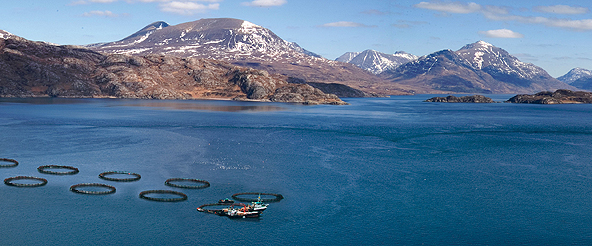
The Scottish Salmon Company has unveiled plans to invest over £40 million to expand its business over the next five years, resulting in the creation of over 100 jobs across the West Coast and islands of Scotland. The Scottish based and operated salmon farming company’s five-year development plan envisages establishing ten new farm sites, increasing farming capacity and developing its harvesting, processing and freshwater operations.

The fully-integrated seafood currently operates from over 50 sites and in 2010 it reported an annual turnover of £92.4 million. In the past two years, the company has more than doubled staff numbers from 160 to 380 and invested £30 million on developments such as refurbishing the Marybank processing facility, acquiring West Minch Salmon, developing new sites and upgrading existing sites. Last year, the company reported it had produced 24,000 tonnes of salmon. Its ambition is to increase this number to 40,000 tonnes in 2016.

“The Scottish Salmon Company produces premium, fresh Scottish salmon with strong and growing demand in the marketplace. To satisfy this, we require to develop our farming and processing capability,” comments Stewart McLelland, chief executive of The Scottish Salmon Company. “People are key to our vision for expansion. We are keen to bring talent into our business, developing skills, and experience to support our growth plans and that of the overall industry.”

He continues: “We are committed to the communities and economies in which we work and understand the real benefit that developing business and providing employment has in these rural locations.”

Around half the jobs are planned for the Western Isles, with the others in the company’s operational areas throughout the Highlands and Argyll and Bute. The Scottish Salmon Company is currently in the process of scoping, consulting on and lodging planning applications for new fish farming sites.

An infrastructure investment of between £1.5 million and £2 million would be required to develop each of the sites. All sites will be developed to the RSPCA’s ‘Freedom Food’ standard, which governs farming principles such as the stocking density, fish welfare and harvest.

Posted in NewsComments (0)

Arla Foods to Expand in Scotland


Arla Foods is expanding its business in Scotland, and plans to create a new depot in Bellshill, Glasgow, to handle additional milk and product volumes. Arla is aiming to increase production capacity by almost 40% at its Lockerbie dairy in Scotland, which will enable the company to meet growing demand from customers. The new depot will have the capacity to deliver both fresh milk products direct to store, and also other products for own and third party customers through Arla’s pallet network.

Paul Lloyd, vice president for operations at Arla Foods UK, comments: “The proposal is in line with Arla’s growth strategy, and we have identified Scotland as an opportunity for further growth. The new Central Belt depot will establish a strong platform for future fresh milk deliveries in Scotland.”

He adds: “The move will also support our sustainability agenda, as our product will be closer to the customer, reducing the number of road miles.” It is expected that the proposals will be implemented in March 2012. Once up and running, Arla plans to work with a third party to manage the Central Belt depot.

Posted in NewsComments (0)

A Record Year For Scottish Food and Drink Exports


With overall food exports breaking the £1 billion mark for the first and whisky exports also at a record high, 2011 was a momentous year for Scotland’s food and drink industry. Combined food and drink exports reached an all-time high of £4.5 billion with whisky exports worth £3.45 billion.

The most popular food export from Scotland was fish and shellfish, worth £623 million. Scotch beef and lamb exports reached £100 million in 2011, for the first time since 1996. The top market for food and drink exports is France, followed by USA, Spain, Singapore and Germany.

“Despite a difficult economic environment in 2011, our food and drink sectors have exceeded all expectations and are now a huge success story,” comments Scottish Rural Affairs Secretary Richard Lochhead. “Exports are continuing to rise and we are committed to helping the industry deliver a 50 per cent increase in the value of exports by 2016. So it’s great news that there are a number of key growth markets – including China, South Africa and Poland – where exports of Scottish produce are seeing significant growth. Thanks to our quality ingredients, clean environment and passionate producers, Scotland is developing an enviable reputation for creating first-class products.”

Posted in NewsComments (0)

Diageo Opens £10 Million Cooperage in Scotland


Diageo has officially opened the first new cooperage to be built in Scotland for decades. The new Diageo Cambus Cooperage near Alloa has been custom designed in close co-operation with the company’s coopers, drawing on generations of skill, craft and experience and combining it with the state-of-the-art British engineering – never before used in a cooperage.


The new cooperage will craft around 250,000 casks each year – all of which will be used to mature Scotch whisky for Diageo’s world leading brands, such as Johnnie Walker, Bell’s and J&B Rare. The technology in the cooperage was developed by CI Logisitics, a Leicester-based engineering firm which works mainly with the car industry.


Richard Bedford, Diageo’s grain distilling director, who was responsible for the Cambus Cooperage project, says the increase in demand for Diageo’s world-leading Scotch whisky brands meant the new cooperage was a key part of the company’s overall investment programme for growing its production capacity in Scotland.


He comments: “The demand for Scotch whisky is growing around the world, particularly in the emerging markets of Asia and Latin America. To meet that increasing demand Diageo is investing in growing Scotch whisky production capacity acrossS cotland. That means we need more casks than ever before, so the new Cambus Cooperage is a key part of the future success of our Scotch whisky brands.”


Scotland is one of Diageo’s largest spirit supply centres responsible for producing nearly 50 million cases of leading brands of Scotch whisky and white spirits and over four million cases of ready-to-drink brands annually. Around 85% of Diageo’s brands produced in Scotland are sold overseas.

Posted in NewsComments (0)

Scottish Government to Introduce Minimum Alcohol Pricing


The Scottish Government has published its Alcohol (Minimum Pricing) Bill, which looks to set a minimum price for a unit of alcohol. It also sets the formula for calculating the minimum price (based on the strength of the alcohol, the volume of the alcohol and a price per unit of alcohol). A specific minimum price per unit of alcohol will be announced during the Bill process.


According to the Scottish Government, support for minimum pricing has come from all quarters – the Welsh Government, Northern Ireland Executive, all 17 of Scotland’s public health directors in NHS Scotland, the Chief Medical Officer of Scotland Sir Harry Burns, British Medical Association, the Royal Colleges, ACPOS, Scottish Licensed Trade Association, Church of Scotland, various children’s charities, Tennents, Molson Coors and Greene King.


A similar Bill proposed by a then minority government was defeated in Parliament last year. However, the present Government now has a majority. “Scotland’s unhealthy relationship with alcohol is one of the most pressing public health challenges facing us as a nation and we need to take action to tackle it. Here we have a second opportunity to add the missing piece in the legislative jigsaw – introducing minimum pricing. I urge my parliamentary colleagues to take it,” says Cabinet Secretary for Health and Wellbeing Nicola Sturgeon.


Not surprisingly, the Wine and Spirit Trade Association is opposing the Bill. The WSTA is the voice of the British wine and spirit industry, representing over 340 companies producing, importing and selling wines and spirits.


“As millions of families face the toughest economic conditions for a generation the Scottish Government is determined to press ahead with legislation that will punish the vast majority of responsible consumers with higher prices,” comments Jeremy Beadles, chief executive of the WSTA. “Yet there is no evidence minimum pricing will address the problem of alcohol misuse and the most recent Government figures show alcohol consumption per capita fell in Scotland last year.”


He adds: “The Scottish Parliament should insist on its right to review the policy and its impact on cross-border shopping, internet sales of alcohol and any evidence of illegal trade of alcohol in Scotland.”

Posted in NewsComments (0)

Milk Link to Invest £20 Million to Expand Lockerbie Creamery


Milk Link, the UK’s largest cheese maker owned by over 1,600 dairy farmers, is to invest £20 million to transform its Lockerbie Creamery in Scotland, enhancing both its capacity and capabilities and making it one of the UK’s leading Cheddar production facilities. The investment will make Lockerbie the biggest dairy processing facility in Scotland and one of the largest and most advanced creameries in the UK. The site will benefit from a major redevelopment with the installation of the latest processing technology increasing annualised production by 12,000 tonnes to over 37,000 tonnes of cheese per annum.


The major investment being made at Lockerbie will not only secure the long term future of the creamery but also help to provide a strong platform for the expansion of dairying in South West Scotland and the North of England. In line with the new creamery’s increased processing capacity, Milk Link will now be actively recruiting additional Members in Scotland and the North of England to supply Lockerbie.


The investment will enhance Lockerbie’s product consistency and productivity. It will complement Milk Link’s other major Cheddar creameries – Taw Valley in Devon and Llandyrnog in North Wales – and enable the business to meet the growing demand from leading retailers, food service businesses, food processors and export customers for its high quality range of customer label and branded cheeses, butters and dairy ingredients.


“Our investment at Lockerbie will transform the creamery and reinforce Milk Link’s leadership position in the production of high quality British cheeses,” says Neil Kennedy (pictured), chief executive of Milk Link. “At the same time, we believe it provides a timely boost to the dairying sector in South West Scotland and the North of England as we increase the volume of milk from the region going into value added dairy processing.”


He continues: “The capital investment programme will be the largest undertaken to date by Milk Link and indeed is one of the largest investment projects in cheese manufacturing seen over the last 20 years in the UK.”


It follows on from Milk Link’s major investments at TawValley in relation to a next generation whey processing plant and the building of a new soft cheese creamery at Cornish Country Larder’s Trevarrian site, both of which will be fully operational this Autumn. Work at Lockerbie will start later this year and will be completed by Autumn 2012.

Posted in NewsComments (0)

Scottish Food and Drink Exports Set New Records


Having reached record levels last year, export sales of Scottish food and drink products have broken the £2 billion mark for the first time in the first six months of 2011. Figures for the first half of 2011 show food and drink exports now stand at £2.4 billion – up 21% on the same period last year.


Scottish food and drink exports reached an all-time high of £4.5 billion in 2010, up 28% since 2007 and up 11% on the previous year. France was the top market for Scottish food exports in 2010, consuming £276 million worth of food, ranging from fish and shellfish to fruit and vegetables.


While fish exports continue to account for the majority of food exports from Scotland (59% in 2010), the sector that saw the biggest growth was fruit and vegetables. The value of exports in this sector grew by £14.6 million, or 62%, in 2010.


When it comes to drink exports, the market is dominated by whisky and the USA remains the top destination with £499 million worth exported in 2010.

Posted in NewsComments (0)

Scottish Salmon Exports on the Rise


Scottish farmed salmon continues to show record export growth, rising by 37% to 34,840 tonnes in the January to May 2011 period compared with the same months last year. Scotland is the largest producer of farmed Atlantic salmon in the EU and the third largest globally, behind Norway and Chile.


Scottish salmon production increased to over 150,000 tonnes in 2010, marking a third successive annual increase. In 2010 salmon farming provided 1,813 direct jobs in Scotland, an increase of around 15% on the previous year (while many more jobs are supported indirectly).


“Scottish salmon is a high quality, delicious product that is becoming increasingly popular around the world – as illustrated by the latest booming export figures. Last year salmon accounted for 36% of the value of Scottish food exports, while the industry also provides much needed employment opportunities in our fragile rural communities,” points out Scottish Environment Minister Stewart Stevenson. “It’s important that we continue to promote this key product and encourage further investment in the industry, as well as working with others internationally on ways to continue improving the environmental sustainability of aquaculture.”


According to Scott Landsburgh, chief executive of Scottish Salmon Producers’ Organisation (SSPO): “The salmon farming sector has made around £150 million in capital investment during the last five years – the vast majority of this has been in the Highlands andIslands.”

Posted in NewsComments (0)

PepsiCo Invests £8.5 Million in Quaker Mill as Porridge Sales Soar


PepsiCo UK is investing £8.5 million in its Quaker Oats site at Cupar in Fife, Scotland, in order to meet increasing consumer demand for Quaker’s hot cereals, which have grown by 13% over the last year. Quaker Oats will benefit from a new state-of-the-art plant based at the Cupar site, helping to boost its oat milling capacity and allow for increased production.

Porridge has become an ever more popular and all-year round breakfast choice for British consumers. In particular, Quaker’s Oat So Simple range has been driving the company’s growth with sales of the product’s flavour variants growing by 30% year on year. The launch of this range revolutionised the porridge market as it made it easier for people to cook porridge and offered taste variations.

“Quaker Oats have been milled at the Cupar site for over 60 years and as we’re one of just two manufacturers that still mill our own oats, it’s really important for us to continue to invest in the site, so that we can protect this great heritage,” says David Murray, general manager of Quaker Oats. “We’ve been expanding the site for many years, having added 8 production lines since 2002, but this new investment will really help us to continue to feed the incredible consumer demand for porridge as a breakfast choice.”

Quaker Oats have been produced on the Cupar site since 1947. The site is currently home to Quaker Oats and Scott’s Porage Oats; producing Oat So Simple, as well as Quaker’s latest innovation, Quaker Oat So Simple Pots, designed to make porridge preparations even easier.

Posted in Capital Projects, NewsComments (0)

Diageo to Expand Islay Distillery


Diageo, the world’s largest producer of Scotch whisky, is to invest £3.5m to expand and upgrade its Caol Ila distillery on the Sound of Islay. Production at the site will be increased by 700,000 litres a year.

Established in 1846, the distillery currently produces 5.7 million litres of whisky every year, with the majority used in Diageo’s blended whisky brands. The upgrade is scheduled to commence in June and take six months to complete.

“An investment of this scale is fantastic for the local economy and it signals Diageo’s deep-rooted commitment to the Islay whisky industry,” says Kevin Sutherland, senior site manager on Islay. “Caol Ila is a wonderful distillery of which we are very proud and I am delighted we are going to be able to produce even more fantastic single malt as well as contributing to the growth of Johnnie Walker and Diageo’s other leading global Scotch brands.”

To meet growing international demand for its Scotch whisky brands, Diageo has already invested £600m to expand production capacity over the past six years, including £40m on The Roseisle distillery (pictured) in Speyside, the first malt distillery of scale to be opened in Scotland in over 30 years.

Posted in NewsComments (0)

First UK Craft Beer in Cans


BrewDog, Scotland’s largest independent brewery, has officially announced the launch of its flagship beer, Punk IPA, in cans. Punk IPA will be the only craft beer available in cans in the UK.

The 330ml cans will initially be available exclusively from Sainsbury’s nationwide and the supermarket group will now also stock the brewer’s popular 5AM Saint amber ale and award-winning 9.2% ABV Hardcore IPA, marking another step in the UK craft beer revolution. BrewDog now has four beers in 350 Sainsbury’s stores nationwide.

James Watt, co-founder of BrewDog, comments: “Punk IPA has been our most successful beer so far, and the launch of Punk in cans is a landmark moment for us and for the insurgency of craft beer in the UK drinks market. We want to make everyone as passionate about beer as we are and in addition to the can launch, the fact that Sainsbury’s is now stocking a 9.2% ABV IPA proves that we’re already making great headway. Crap beer’s days are numbered.”

Posted in NewsComments (0)

Record Year at Graham’s The Family Dairy


Graham’s The Family Dairy, Scotland’s largest independent dairy company, achieved record sales and profits during its last financial year ended March 31st 2010. Turnover broke through the £40m barrier for the first time and pre-tax profit rose by 28% to £1.05m.

“We have made a significant investment in product innovation and developing the Graham’s brand, which for the first time in its 71 year history now has UK-wide distribution,” remarks Robert Graham, managing director of . Graham’s The Family Dairy.

Graham’s is currently undertaking a major investment programme to expand its butter plant in Bridge of Allan and will be launching new product lines during 2011 including the first spreadable butter from a Scottish dairy.

The company expects turnover will now exceed the £50m mark following its recent acquisition of fellow Scottish dairy processor Claymore Dairies.

Posted in NewsComments (0)

Diageo Opens First Scotch Malt Whisky Distillery of Scale in Over 30 Years


Diageo, the world’s leading premium drinks company, has opened the doors of its new £40 million distillery in Speyside, Scotland. The Roseisle distillery is the first malt distillery of scale to be opened in Scotland in over 30 years and has been built in response to the high demand for Scotch whisky brands such as Johnnie Walker and Buchanan’s around the world.

The award-winning distillery will be formally opened by Diageo chief executive Paul Walsh on October 11th. The new distillery combines centuries of accumulated distilling knowledge and expertise with cutting-edge design and technology, to produce quality spirit for Diageo’s brands.

The £40 million investment in Roseisle is part of a capital investment programme in Scotland which has totalled £600 million over the past six fiscal years and has focused on building high quality capacity to meet growing international demand for Diageo’s iconic brands.

Posted in NewsComments (0)

Bacardi Completes First Phase of $250 Million Investment in Scotch Whisky Production


Bacardi, the largest privately held spirits company in the world, has completed the initial phase of its $250m investment in Scotch whisky production. The investment is to meet growing demand for the group’s portfolio of Dewar’s Scotch whiskies.

Bacardi acquired the Dewar’s brand in 1998. Bacardi, through its John Dewar & Sons subsidiary, employs 300 people at seven locations throughout Scotland. The company currently operates whisky distilleries in Aberfeldy, Macduff, Aultmore, Craigellachie and Royal Brackla with blending, bottling and packaging facilities in Glasgow and maturation facilities in Poniel in Central Scotland.

“Demand for Dewar’s Scotch whiskies has grown significantly in the United States, Asia and other emerging markets and we are excited to have completed the first phase of a new infrastructure project to support higher inventories of maturing whisky and increase our blending, bottling and packing capabilities,” says Seamus McBride, president and chief executive of Bacardi.

Seamus McBride, president and chief executive of Bacardi.

Dewar’s has undertaken a comprehensive redevelopment of an existing site in Parkhead, Glasgow, and has built five new maturation warehouses and a new blend center, as well as installed new bottling lines and packing equipment. The Dewar’s expansion project, which started in July 2007 and was one of the most significant investments ever in the Scotch industry at the time, will be completed in phases over ten years.

The company also purchased more than 100 acres in central Scotland and developed a second maturation facility including six warehouses where Dewar’s ages whisky for flavour and smoothness. Three more aging warehouses are currently under construction and a blending facility will be built next year.

Environment and Energy Management

Dewar’s has planted close to 100,000 indigenous trees including birch, rowan oak and beech to naturally enhance its new maturation facility in central Scotland and complement the surrounding landscape. Another 40,000 more trees will be planted over the next three years. Careful planning was taken for both construction and tree planting to not interfere with bird nesting seasons.

Overall, efficiencies in Dewar’s Scotch production have resulted in energy savings, and usage is down by 11% in distilleries over the past three years. Since fiscal year 2009, water usage has been cut by 17.5 percent, resulting in a savings equivalent to 300 Olympic swimming pools every year.

Returning water back to nature is important as well. At its Aberfeldy distillery treated leftover water is cleaned by passing through a reed bed, an innovative natural filtration process to flow into the River Tay, famed for its salmon and trout fishing.

In addition, the design and construction of the new facilities was undertaken by local suppliers and the vast majority of malted barley, yeast and packaging materials including glass, caps and cases are purchased locally to reduce ‘road miles’ and cut carbon emission impacts.

Another sign of its move into the future, Dewar’s recently unveiled a new modern, bold and cohesive look and package design, visually linking its portfolio of premium blended and single malt Scotch whiskies. The growing demand for Dewar’s has also led to an increase in visitors at the Dewar’s World of Whisky, in Aberfeldy. Opened in 2000, the centre is rated a five-star tourist attraction in Scotland.

In addition to Dewar’s Scotch whisky, the top-selling blended Scotch in the US, the Bacardi brand portfolio consists of more than 200 brands and labels, including: Bacardi rum, the world’s favorite premium rum; Grey Goose vodka, the world-leader in super premium vodka; Bombay Sapphire gin, the top valued and fastest-growing premium gin in the world; Martini vermouth, the world-leader in vermouth; Cazadores blue agave tequila, the top selling premium tequila in the world; and other leading brands.

Posted in NewsComments (1)

New First Milk Creamery Moves a Step Closer


First Milk’s plans to build a state-of-the-art creamery at Campbeltown in Scotland have moved a step forward after Argyll & Bute Council approved a planning proposal for a new Tesco store. The Tesco store will be built on the site of First Milk’s existing creamery at Campbeltown, allowing the UK dairy farmers’ co-operate to relocate the business to purpose-built premises on the outskirts of the town.

First Milk was granted planning permission for the new creamery at Snipefield in the summer but a move could not take place without Tesco also being granted approval to build a new store on the site of the existing creamery.

The new creamery will secure the future of 40 dairy farms and 100 jobs in the Kintyre area. The proposed creamery will be funded from three sources – up to £3.9m from the Scottish Government; the sale of the existing creamery site to Tesco and funds from First Milk.

The current creamery was built in the 1820s as a whisky distillery before being converted to a cheese-manufacturing facility. With no other viable processing outlet for these farms, future prospects for the dairy industry in the area were bleak without a replacement creamery.

Posted in NewsComments (0)

BrewDog Engages Army of Shareholders in Innovative Sales Offensive


BrewDog, Scotland’s largest independent brewery, has developed an innovative approach to increasing the availability and sales of its craft beers. Following its unique ‘Equity for Punks’ programme last year, which raised £750,000 of capital and made BrewDog the first company in Europe to have an online only public share offering, the innovative company is now engaging its army of shareholders to head a sales offensive.

Some 1300 shareholders are being encouraged to introduce BrewDog’s craft beer to bars across the country. Dubbed ‘BrewDog to the People’, the campaign will see shareholders dropping ‘Punk Kits’ into pubs and bars where they would like to see BrewDog beers sold.

The Punk Kits include a booklet with information on BrewDog, a separate product information sheet on all of the company’s beers, including the classic Punk IPA and more specialist beers such as Hardcore IPA, as well as a ‘how to buy’ sheet with information on BrewDog’s distributors by region. In-venue promotional material is also included.

“BrewDog to the People gives the people who want to see a craft beer revolution, a chance to spark one. Equity for Punks was always going to be about more than just being a shareholder; it is an opportunity to help us change things,” explains BrewDog co-founder, James Watt. “Helping sales not only boosts our shareholders’ equity, they help to sound the death knell for drab, tasteless beers that dominate the UK on trade.”

Posted in NewsComments (0)

Morpol Expands UK Salmon Business


Poland-based Morpol, which is one of the world’s leading salmon processors, has expanded its UK operations with the acquisition of Brookside Products for less than £1m. Based in Cumbria, Brookside produces about 1,500 tonnes of smoked salmon a year and is projecting a turnover of £12m for 2010.

Brookside currently has an estimated 10% of the UK smoked salmon market. Morpol will use Brookside as a platform to further strengthen its position in this important market. Morpol entered the UK salmon farming sector in August with the acquisitions of Mainstream Scotland and Westray Scotland.

“Through the combination of recent farming acquisitions in Scotland and this important step into smoked salmon processing within the UK, we now have an excellent base where we can further penetrate not only the UK market, but also other European markets” says Jerzy Malek, chief executive of Morpol.

The Morpol Group had revenue of approximately Eur340m in 2009. Founded in 1996 in Ustka on the Baltic coast of Poland, the company employs over 3,000 people in eight countries. Morpol Group is the world leader in smoked salmon. Morpol serves customers across Europe, in Japan and the US.

Posted in NewsComments (0)

Dairy Consolidation in Scotland


Graham’s, Scotland’s leading independent dairy company, is acquiring Claymore Dairies for an undisclosed price. Claymore Dairies was sold earlier this year by Arla Foods and North Milk Co-op to a management buyout also for an undisclosed sum.

The acquisition of Claymore will increase Graham’s annual turnover to about £50m

And the enlarged business will employ more than 400 people.

“Since the buyout, we have had several meetings with Graham’s. During that period, it has become increasingly clear that there would be significant benefits by putting the businesses together,” explains Ian Larg, managing director of Claymore Dairies. “Graham’s’ diversity and greater market position will be a major benefit to Claymore going forward. This will lead to greater security for the dairy, its staff and supplying dairy farmers.”

Posted in NewsComments (0)

VION Investment Programme Creates 250 New Jobs in Scotland


Netherlands-based VION, Europe’s largest fresh meat group, is creating an additional 250 jobs within its Scottish operations. A multi-million pound investment programme, together with the support and commitment of the workforce, and active partnership with the Scottish Government, Scottish Development International (SDI) and Scottish Enterprise (SE), has delivered a swift and positive return.

Approximately 150 new jobs have been created at VION’s chicken processing business at Coupar Angus, where the investment included the installation of a new finished packing line, enabling VION to offer true ‘Produce of Scotland’ – chickens hatched, reared and processed in Scotland, with the birds grown with feed from its own Scottish mill.

A further 100 jobs have been created at the added value plant at Cambuslang. The investment has allowed the site to grow its business by 25% in 2010.

In addition, 234 jobs at Cambuslang have been safeguarded with the help of a Scottish Enterprise Regional Selective Assistance grant of £650,000.

“This is very positive news and just reward for the tremendous efforts not only of the teams at Cambuslang and Coupar Angus, but also through the wider VION supply chain from our farmers and feed mill operators, through to our production, sales and administration colleagues,” comments Andrew Fisher, VION Poultry’s regional director for Scotland and the Southern Region.

VION’s the UK arm, VION Food Group, produces and processes high quality beef, lamb, pork, bacon and chicken as well as a wide range of convenience products such as sausages, cooked meats and added value cooked chicken. The UK operation has extensive facilities across the Britain from farms and hatcheries to primary production, processing and packing. The business is primarily focused on the UK retail market but also includes important food service and wholesale clients within its portfolio.

Posted in NewsComments (0)

Royal Visit For Scottish Pate Producer


Castle MacLellan Foods, the Scottish luxury pate producer based at the fishing town of Kirkcudbright, was visited recently by the British Queen. Established for over 28 years, Castle MacLellan Foods has grown from a small operation producing several tubs of pate a day in the back of a small delicatessen, to a national player, supplying supermarkets the length and breadth of the country.
Its foray into the retail sector began when a supermarket buyer tasted the products whilst on holiday in Kirkcudbright. By 1987 demand was such that a new factory was built in order to enable business to grow.

Castle MacLellan Foods was purchased by Norwegian company Kavli in 1997. Kavli produces a large variety of food products sold in more than 30 countries, and has production facilities in Norway, Sweden, Denmark, England and Scotland.

Working with Kavli, over £1m has been invested in new machinery over the last two years, improving efficiency and increasing production capacity to meet with growing demand for the Castle MacLellan brand, as well as retailer own label products.

The Kavli group is owned by the Kavli Trust, a charitable organisation set up by the Kavli family in 1962. Profits from the group’s commercial activities are used to support good causes both in the UK and around the world – ranging from disaster relief and fair-trade projects, to dementia research and the support of education and cultural projects.

CAPTION:

The Queen meets Castle MacLellan general manager Elaine McConnell.

Posted in NewsComments (0)

AG Barr Sparkles as it Breaks £200 Million Sales Barrier


Having broken through the £200 million sales barrier and lifted profits by 20% while significantly outperforming the UK soft drinks market in its 2009 financial year, Glasgow-based AG Barr has now commenced a £10 million expansion programme at its Cumbernauld site in Scotland.

According to AG Barr, the UK soft drinks market, in contrast to the prior year, when volume declined by over 2%, increased by 1% in volume terms and by 2% in value terms in the 52 week period ending 23rd January 2010. Indeed, the difficult economic environment appears to have had limited impact on the overall market and carbonates in particular have continued to show good growth across the year.

“Consumers have continued to purchase a wide repertoire of soft drinks and have maintained a preference for established product groups that deliver both quality and value. Retailer branded soft drinks have not increased their share of the market, perhaps reflecting the competitive nature of pricing and promotion across the category as a whole,” explains Roger White, chief executive of AG Barr. “The soft drinks category has once again demonstrated its ability to deliver growth in volume and in value terms despite difficult macro economic conditions. The landscape remains competitive but consumers continue to respond well to both existing brands and products and to well executed innovation.”

Roger White, chief executive of AG Barr.

Market growth was driven by the strong performance of carbonates with all sectors performing strongly with the fastest growth coming from energy drinks. The water market recovered, registering 5% volume growth and 2% value growth during the year.

“Over the period we have seen excellent growth across our key brands as we look to appeal to more people, more often, in more areas across the market,” he adds.

Financial Performance

AG Barr outperformed the UK soft drink market to increase profit on ordinary activities before tax and exceptional items from £23.1 million to £27.9 million on turnover ahead by 18.7% to £201.4 million for the twelve months to January 30th 2010. Like for like sales, stripping out the impact of the Rubicon acquisition, increased by 10.6% as AG Barr’s core carbonate brands and still juice brands grew well ahead of the market. Indeed, the group’s flagship Irn-Bru brand increased revenue by over 5% with strong growth in England and Wales.

Having successfully integrated the Rubicon juice business over the course of its last financial year, AG Barr increased operating margins by 1.2%. Net debt was reduced by 29.5% during the year and stood at £22.1 million on January 30th last, reflecting continuing efforts to improve cash management and capital efficiency across the business.

“Our core business sales performance was excellent and the Rubicon brand has added a new dimension to our business. Our sales growth continues to be underpinned by substantial investment in our brands and infrastructure. In the last year we have maintained a tight control of all our costs allowing us to improve margins once again,” points out Roger White. “We continue to face an uncertain economic outlook with the additional challenge of substantial operational changes across 2010/11. However, looking forward we remain confident in our ability to deliver against our strategy.”

Broader Portfolio

AG Barr has been successfully broadening its product portfolio, which was traditionally dominated by carbonates, headed by the Irn-Bru brand. The company’s carbonates grew by 10.1% in value terms, well ahead of the overall market in 2009. The addition of Rubicon helped the group’s still drinks and water segment, which also includes the Strathmore brand, to contribute £17.2 million to turnover growth. Indeed, still drinks and water now account for 22.4% of group revenue, up from 16.5% in the previous year.

£10 Million Investment

The UK’s largest independent soft drinks producer has recently commenced an investment and restructuring programme, including a £10 million investment to expand production capacity at its Cumbernauld site in Scotland and the planned closure of its Mansfield site in England. This will entail moving between 60 and 70 million litres of production from Mansfield to Cumbernauld.

“The £10 million investment at the Cumbernauld facility is largely about replacing our filling capacity with higher output machinery which will allow us to consolidate all of the production from our Mansfield site into the Cumbernauld site,” says Roger White. “The investment is really about underpinning what we already do in Cumbernauld, but to make bigger, faster and more efficient production facilities around the site.”

Posted in FeaturesComments (0)


Industry Video

PepsiCo

Join our newsletter:

You can also subscribe to:

Follow us on Twitter


Advertisements:


________________________________________________ ________________________________________________
________________________________________________ ________________________________________________
________________________________________________ ________________________________________________
________________________________________________ ________________________________________________
________________________________________________ ________________________________________________
________________________________________________ ________________________________________________
________________________________________________ ________________________________________________
________________________________________________ ________________________________________________
________________________________________________ ________________________________________________

________________________________________________ ________________________________________________

________________________________________________ ________________________________________________

________________________________________________ ________________________________________________


________________________________________________ ________________________________________________


________________________________________________ ________________________________________________


________________________________________________ ________________________________________________

________________________________________________ ________________________________________________

________________________________________________ ________________________________________________

________________________________________________ ________________________________________________
1

The Magazine

Event Calendar

May 2013
M T W T F S S
 12345
6789101112
13141516171819
20212223242526
2728293031EC