Tag Archive | "seafood"

UK Smoked Fish Industry Receives Funding Boost


The UK’s traditional smoked fish industry is to benefit from European and industry funding to promote awareness and increase sales of its specialist seafood products. Funding will be used to develop a brand identity, interactive website and drive attendance at a series of specialist food events. The aim is to improve consumer awareness of the traditional smoking method and enhance the profile of this niche industry in the high-end retail and food service markets of the UK.

The project has come about through collaboration of key industry partners across the supply chain including:  Grimsby Fish Merchants Association, Alfred Enderby, Sealord (Caistor), Seachill, John Ross Jr, Coln Valley, The Smokeyard Artisan Smokehouse, Arbroath Smokies and The Fish Mongers Company.

The project is led by the Grimsby Fish Merchants Association on behalf of the wider industry group. The GFMA’s chief executive, Steve Norton, comments: “Traditionally smoked fish is a fantastic product that is often overlooked and undervalued by the consumer; this project will highlight the positive benefits and attract a new, younger consumer to a wonderful versatile product that is part of Britain’s food heritage.”

The project is supported by funding from the European Fisheries Fund (EFF), administered by the UK’s Marine Management Organisation and the Seafish Industry Project Fund, managed by the Sea Fish Industry Authority.

Posted in NewsComments (0)

Donegal Catch Supports Irish Fishing Industry With Responsible Irish Fish Partnership


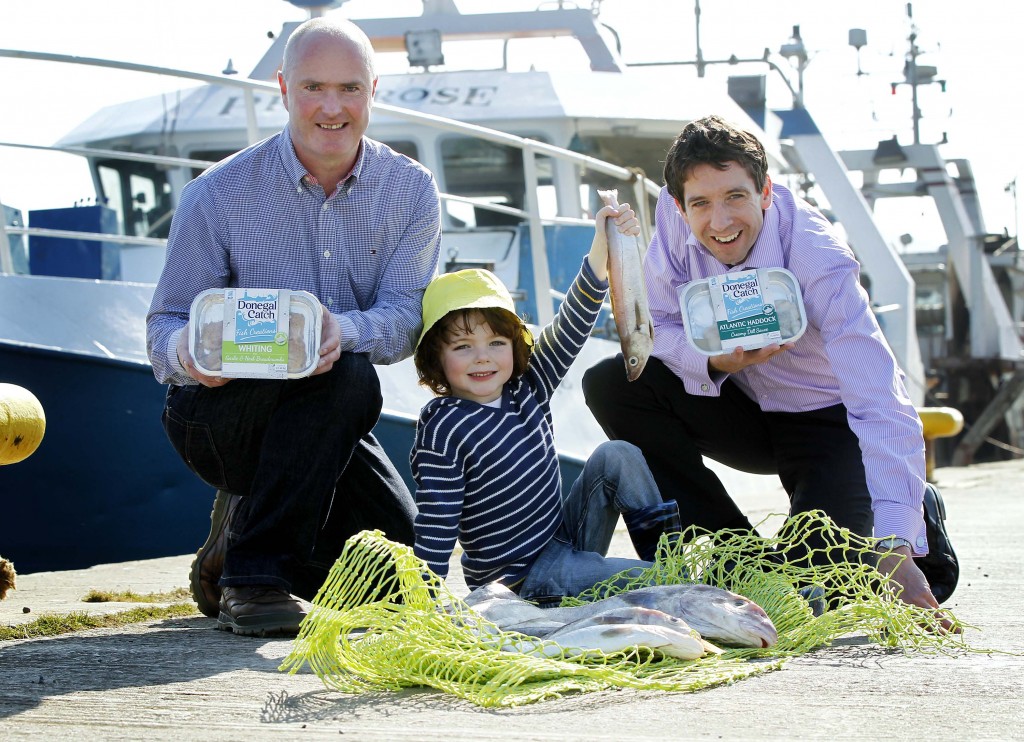
Donegal Catch, Ireland’s number one frozen fish brand, has entered a partnership with Responsible Irish Fish, a group dedicated to developing a brand and label to allow Irish fishermen differentiate their products in the market place and to promote Irish fish being caught in a responsible manner. Donegal Catch is also expanding into the chilled category with the launch of its new Fish Creations range, of which the RIF label will appear on the Irish caught species (haddock, plaice and whiting) of the range.

Olivia Kearney, Donegal Catch brand manager, remarks: “Donegal Catch is proud to be supporting Responsible Irish Fish and will feature theRIF label on the Irish caught species of both the new chilled and existing frozen range, so consumers can easily identify these packs. Where possible, we source our fish in accordance with best practices to ensure the long- term viability of fish supplies in the Irish catching sector that in turn supports jobs and industry. We also feel that it is important for Irish consumers to eat more Irish species and to realise that they are supporting and protecting jobs in the Irish catching sector.”

Frank Fleming, founder of Responsible Irish Fish, comments: “Companies like Donegal Catch play an important role in the sustainability of the Irish fishing sector. The RIF label allows consumers to have confidence in the origins of the seafood that they are eating and comfort in the fact that it has been caught responsibly. We are delighted with the opportunity to be aligned and supported by a reputable quality brand like Donegal Catch.”

Research has shown that there is a growing importance, from 55% in 2007 to 73% in 2011, for consumers to buy local produce when food shopping. Donegal Catch is well placed to take advantage of this growing trend as the largest purchaser and processor of whitefish in Ireland, distinguishing itself from the competition by ensuring its haddock, whiting and plaice are Irish.

Donegal Catch has identified a demand in the market for chilled, freshly pre-packed products. Research carried out by Donegal Catch found that consumers want a range that delivers on taste, limits preparation time and is convenient to cook. Expansion into the chilled market which is worth over Eur100 million, represents an important advancement for Donegal Catch that already has a valued and trusted reputation within the frozen category.

Olivia Kearney adds: “Our research found that consumers felt daunted by the chilled category and that they needed the know-how to cook fish recipes from scratch. We felt there is a great opportunity to bring Donegal Catch, a trusted and loved brand, into this space.”

Donegal Catch is part of the Green Isle Group, which is now owned by 2 Sisters Food Group. Green Isle currently employs 750 staff of which 68 are directly employed in the fish business that operates out of Gurteen,CountySligo. Turnover for the fish business rose 5% to Eur30million for the fish business in 2011. About 30% of Donegal Catch’s fish business comes from haddock, whiting and plaice – all Irish caught species.

The main aims of the Responsible Irish Fish group behind the label are:

* to assist vessel owners achieve certification for their fish/shellfish

* to develop a brand to allow Irish fishermen differentiate their products in the market place to promote Irish fish caught in a responsible manner.

The development of an Environmental Management System by BIM, with the fishing industry, forms the basis for the new label. The EMS system can be used as a stepping stone to various forms of certification depending on the fishery a vessel is involved in.

The system implemented by the vessels is based on three main pillars:

* quality (ensuring good practice during handling and storage of the catch),

* provenance (the fish/shellfish sold under the label is fully traceable back to an Irish vessel),

* responsibility (environmental responsibility).

The Responsible Irish Fish group aims to stabilise jobs at the vessel level and to create new jobs in the processing sector by encouraging more demand for Irish caught and Irish processed seafood.


CAPTION:

Pictured are: Frank Fleming, founder of Responsible Irish Fish; Jamie Granger, age 5; and Tom Cronin, head of marketing at Donegal Catch.

Posted in NewsComments (0)

Morrisons to Move into Seafood Processing


Morrisons plans to launch its own seafood processing business to deliver quality fish into its stores. The company will be acquiring an empty factory in Grimsby and equipping it for seafood production by the end of 2012. As a result, Morrisons will be the only major food retailer to source fish direct from the quayside and process it for sale across the country.

The move represents a further step in Morrisons’ strategy of manufacturing more of the fresh food that is sold in its stores. By developing this business, the company will be in an enhanced position to deliver quality fresh and frozen seafood more quickly into store – and at an affordable price for shoppers. Around 200 jobs will be created at the Europa Business Park factory in Grimsby which will fillet and portion a wide variety of seafood.

Dalton Philips, chief executive of Morrisons, comments: “Nobody else is buying direct from the quayside but we’re doing it. Building this seafood business will allow us to move our fish from ‘catch to kitchen’ even more quickly, giving our customers fantastic quality seafood products at stunning prices.”

Morrisons has recruited industry experts to lead the business such as Frank Green, who was appointed head of seafood trading for Morrisons in January and was previously at Young’s. The factory inGrimsbywill be run by Howard Sims, as managing director, and Rob Smith as head of operations. Morrisons will also shortly appoint a fisheries and aquaculture specialist to further develop their credentials in sourcing and sustainability.

Posted in NewsComments (0)

The Scottish Salmon Company Reveals £40 Million Expansion Plans


The Scottish Salmon Company has unveiled plans to invest over £40 million to expand its business over the next five years, resulting in the creation of over 100 jobs across the West Coast and islands of Scotland. The Scottish based and operated salmon farming company’s five-year development plan envisages establishing ten new farm sites, increasing farming capacity and developing its harvesting, processing and freshwater operations.

The fully-integrated seafood currently operates from over 50 sites and in 2010 it reported an annual turnover of £92.4 million. In the past two years, the company has more than doubled staff numbers from 160 to 380 and invested £30 million on developments such as refurbishing the Marybank processing facility, acquiring West Minch Salmon, developing new sites and upgrading existing sites. Last year, the company reported it had produced 24,000 tonnes of salmon. Its ambition is to increase this number to 40,000 tonnes in 2016.

“The Scottish Salmon Company produces premium, fresh Scottish salmon with strong and growing demand in the marketplace. To satisfy this, we require to develop our farming and processing capability,” comments Stewart McLelland, chief executive of The Scottish Salmon Company. “People are key to our vision for expansion. We are keen to bring talent into our business, developing skills, and experience to support our growth plans and that of the overall industry.”

He continues: “We are committed to the communities and economies in which we work and understand the real benefit that developing business and providing employment has in these rural locations.”

Around half the jobs are planned for the Western Isles, with the others in the company’s operational areas throughout the Highlands and Argyll and Bute. The Scottish Salmon Company is currently in the process of scoping, consulting on and lodging planning applications for new fish farming sites.

An infrastructure investment of between £1.5 million and £2 million would be required to develop each of the sites. All sites will be developed to the RSPCA’s ‘Freedom Food’ standard, which governs farming principles such as the stocking density, fish welfare and harvest.

Posted in NewsComments (0)

Lion Capital Purchases Cumbrian Seafoods


Private equity firm Lion Capital, which owns Young’s Seafood, has expanded its UK fish and seafood interests with the acquisition of the customer contracts and equipment of Cumbrian Seafoods from the administrators. Cumbrian Seafoods is the UK’s leading independent seafood company, employing 500 people. It has a state-of-the-art plant at Seaham in County Durham (pictured), a smokery at Whitehaven in Cumbria and the Border Laird shellfish facility at Amble in Northumberland.


According to Lion Capital, future options for Cumbrian Seafoods, which could involve integration and servicing of customer contracts by Young’s Seafood, will be explored over the coming weeks. Leendert den Hollander, chief executive of Young’s Seafood, says: “This is the beginning of a process and the teams involved will work hard to understand the business and consider in detail how best to take the customer contracts forward. Our focus is on customers – on fulfilling their contracts – and consulting with new employees on possible options for the future.”

Posted in NewsComments (0)

Call For International Action to Fight Illegal Fishing


Illegal fishing not only seriously distorts markets for EU fishermen and consumers, but threatens to destroy the biodiversity of the world’s oceans, the EU Fisheries Committee has warned. An estimated 15% of world catches – between 11 and 26 million tonnes a year – come from illegal fishing. The committee is calling on the EU to promote international action, including stepping up inspections at sea and closing markets to illegal seafood, to maintain world fish stocks.


Given the high mobility of fish stocks and fishing fleets, illegal, unregulated and unreported (IUU) fishing can only be effectively tackled by international co-operation, say MEPs, stressing that the EU, as the world’s major fishing power and the largest importer of fisheries products, should play a key role in mobilising international community to combat IUU.


Besides threatening fish stock sustainability and food security, which affects both consumers and fishing communities illegal fishing constitutes unfair competition for fishermen who abide by the rules


The technology to monitor and prevent illegal fishing now exists – what is missing is the political will to do so, say MEPs. The committee urges the Commission and Member States to press the issue in international fora such as the WTO, and calls for sanctions against states that fail to meet their international obligations, eg by ensuring that vessels that fly their flags abide by the rules.


The committee also says that aid from the EU’s generalised preference system should be conditional upon applicant countries’ compliance with FAO and UN rules against IUU and that the Commission and Member States should step up their financial and technical support for surveillance programmes in the waters of developing countries.


Since two thirds of world’s oceans are beyond national jurisdiction, new measures are needed, such as compulsory registration of fishing vessels above 10 GT (gross tonnage), a global catch certification scheme, international exchange of information on vessels activities, import controls and an agreement on closing markets to illegally caught fish, say MEPs.


To be effective, such measures must be backed by major fish markets. MEPs urge the EU to consult major market states, such as the US, Japan and China, about developing international legal instruments, possibly under WTO auspices, to halt, prosecute and punish trade in IUU fish.


MEPs would also like the EU to establish a register of fishing vessels authorised to fish and blacklist those that engage in illegal fishing. They also advocate stepping up inspections at sea, developing catch-documentation schemes, banning transhipments, compulsory use of electronic vessel monitoring systems (VMS) and stronger regional fisheries management organisations to cover all high seas fisheries.

Posted in NewsComments (0)

Consolidation in Scottish Seafood


Associated Seafoods has concluded its second acquisition within a matter of days following the purchases of scampi-maker Moray Seafoods and smoked salmon producer Lossie Seafoods, both based at Buckie in Scotland.

Associated Seafoods is a Scotland-based holding company set up by an experienced management team, with an objective to invest into value-added processing of seafood. It is half owned by Scottish Seafood Investment, a joint venture between Scottish Salmon Company, Scotland’s leading independent salmon producer, and Northern Link, the major shareholder in Scottish Salmon Company.

Associated Seafoods’ strategy is to concentrate on value-added processing of salmon (smoking, ready-to-cook, ready-to-eat, etc.) and adding other species to complement its value-added offering.

Posted in NewsComments (0)

Sustainably Farmed Seafood Holds Key to Future Global Food Security


The first-ever global assessment of the environmental costs of aquaculture shows that farmed seafood is less ecologically damaging than livestock production, and that there is great potential for improvements in efficiency.

A new and comprehensive analysis released by WorldFish Center and Conservation International (CI) has investigated the environmental impact of the world’s major aquaculture production systems and species, and offers a first-ever global assessment of trends and impacts of cultivated seafood. The analysis has found that, from the 75 species-production systems reviewed, more production means more ecological impact, but that compared to other forms of animal protein production such as livestock, aquaculture is more efficient.

The report, ‘Blue Frontiers: Managing the environmental costs of aquaculture’, along with a companion policy recommendations paper, concludes that the demand for aquaculture products will continue to grow over the next two decades as a key source of animal protein for growing urban populations, and that the industry needs to meet this demand with improved efficiencies and reduced environmental impacts.

Among the landmark report’s major findings are two key highlights: (1) the environmental impact of aquaculture varies dramatically by country, region, production system and species , and (2) a review of published information found that aquaculture is more efficient and less damaging to the environment, compared to other animal protein production systems such as beef and pork, and is likely to be among the most important sources of protein for human health and nutrition in growing urban populations in many parts of the developing world. The report also highlights that there is great room for improvement, by identifying and sharing best practices, increasing investment in innovation, and strengthening policies and regulations.

$100+ Billion Industry

Driving the scientists’ research was the recognition of aquaculture as one of the fastest growing food production sectors in the world. It has grown at an average annual rate of 8.4% since 1970 and total production reached 65.8 million tonnes in 2008 according to the Food and Agriculture Organization of the United Nations (FAO). Today, aquaculture is a $100+ billion industry that now provides more than half of all seafood consumed in the world, surpassing wild-caught seafood.

Using all available data from 2008, the study compared aquaculture’s global demands across a wide variety of species groups (13), geographies (18 countries), feed types (5) and numerous production systems in use today, allowing scientists to compare and contrast 75 different types of species-production systems, to determine their environmental impacts on acidification, climate change, energy demand, land-use demand, and other ecological factors.

Findings

Following almost two years of data gathering and analysis, researchers found that:

* China and the rest of Asia collectively supply an overwhelming majority of the world’s cultivated seafood, at 91% of global supply. China alone accounts for 64% of global production.

* On the other end of the supply chain, Europe produces 4.4%, South America produces 2.7%, South American produces 1.9%, and Africa produces 1.6%.

* Most popular aquaculture by country: carp tops the list for China and the rest of Asia; salmon is number one for Europe and Latin America, finfish (tilapias) rank highest in African aquaculture.

* Aquaculture with the highest environmental impact include: eel, salmon, and shrimps & prawns, due to significant energy and fish feeds required for production – these represent greatest opportunities for improvement.

* Aquaculture with the lowest/least environmental impact include: bivalves (mussels and oysters), mollusks, seaweed (those toward the bottom of the food chain; don’t require additional feed).

* Efficiency of salmon production methods: while salmon production trends toward the high end of the environmental impact scale due to the use of wildfish for feed, production methods in northern Europe, Canada and Chile were found to be more efficient than those in China and other Asian countries (in terms of acidification, climate change, energy demand and land occupation).

* Efficiency of shrimp and prawn production methods: cultivation in China was found to be much less efficient than other producer countries (e.g. Thailand) in terms of acidification, climate change and energy demand.

* Aquaculture vs wild-caught fisheries: aquaculture today accounts for a significant majority of all consumed seaweeds (99%), carps (90%), and salmon (73%), and also delivers half (50%) of the total global supply of tilapia, catfish, mollusks, crabs and lobsters.

Looking toward the future of seafood cultivation, ‘Blue Frontiers’ projects that global aquaculture production will continue to grow at current rates, with conservative estimates of 65-85 million tones produced in 2020, and 79-110 million tones by 2030. By comparison, 69 million tonnes of cultivated seafood were produced in 2008.

“China, India and the rest of Asia with their growing middle classes are where we can expect demand for fish to rise most significantly,” says co-author Mike Phillips, a senior scientist at WorldFish. “Current trends indicate that the majority of the increase in global production will come from South and Southeast Asia, with a continued drive by major producer counties such as China and Vietnam towards export to European and North American markets.”

Posted in Environment, NewsComments (0)

Investment to Expand Irish Seafood Processing Sector


The Irish Government has allocated grant aid of Eur1.7m for 18 companies towards a total investment package of Eur7.4m to enhance efficiency within the Irish seafood processing industry. The initiative is expected to create 158 new jobs in the sector over a three years period.

Amongst the companies approved for Government support is Cork-based Fastnet Mussels which will be investing in new capital equipment in order to produce value added cooked mussel products. Atlan Fish in Donegal is developing a value added processing area in order to increase production and broaden its product range, while Rockabill Shellfish in Dublin plans to increase production of value added prawn products and improve efficiencies through the installation of energy efficient equipment.

The aims of the Irish Government’s Processing Scheme are to add value to Irish seafood products, improve efficiency, promote consolidation and create additional income and employment within the sector.

The Government has also launched new pilot jobs initiative for the fishing port of Killybegs aimed at creating an additional 250 jobs in the area by 2014. The jobs initiative is a result of an economic study carried out for the EU Commission which assessed the status, development and potential diversification of Killybegs as a fisheries dependent community.

Posted in NewsComments (0)

Record British Food and Drink Exports


Exports of UK food and non-alcoholic drinks grew for the sixth consecutive year in 2010 to pass the £10b mark for the first time ever. UK food and drink export figures showed a healthy 11.4% increase on 2009 figures, bringing in a total of £10.83b, and highlighted healthy emerging markets amongst non-EU countries.

Amongst the highest performing sectors were dairy (up 24.6% to £977.1m), fish and seafood (up 13.8% to £1.326.9b), meat (+11.7% to £1.46b), prepared foods including soups, sauces and ice creams (+10.3% to £2.59b) and cereals and bakery (+8.1% to £2.08b).

Amongst the top export countries, Ireland remains the principal importer of UK products followed by France, Netherlands, Germany and Spain. Strong performance was also recorded in Hong Kong (+36.3%), the US (+28.9%) and the United Arab Emirates (+22.7%).

Highly encouraging has been the growth of new markets outside the current top 20 export destinations. South Africa recorded a +60.7% increase with a 70.1% increase in sweet biscuits and 170.6% increase in unsweetened cakes and baked goods. China recorded a 28.5% increase – incorporating a 1633% increase in dairy – and Israel a 38.9% overall increase with a 23.3% rise in sugar confection.

“This is excellent news for British food exporters and for the British economy. These figures show that our products are sought across the globe for their quality and great taste,” says Melanie Leech, director general of the Food and Drink Federation, the voice of the UK food and drink manufacturing industry. “The food and drink industry must be at the heart of the UK’s strategy for economic growth – and we look forward to working in partnership with the Minister and his colleagues in Defra, BIS and across Government to ensure that we maximise the economic potential of our sector and ensure that we play our part in contributing to global food security.”

Posted in NewsComments (0)

UK Food and Drink Exports Deliver Strong First Half Performance


UK exports of food and non-alcoholic drinks grew to more than £5b in the first half of 2010 – a rise of 4.3% on the same period in 2009 – and full-year sales to overseas markets are forecast to break the £10 b barrier for the first time, according to figures released by the Food and Drink Federation.

This first half growth has been characterised by an almost entirely flat EU export market but buoyant growth to non EU markets, which increased by 23.1% from £927.6m to £1.14b. All non-EU markets showed growth, but particularly strong markets included North America, up 34.9%, Asia up 34.6%, Latin America up 20.8% and the Middle East, up 20.0%. The fastest growing export market for UK food and drink is Hong Kong, which was up 49.3%.

Dairy proved to be the strongest sector, driven by a 15.2% growth in cheese exports.

Looking at the performance of individual sectors, dairy proved to be the strongest sector, showing growth of 21.3% to £464.3m, driven by a 15.2% growth in cheese exports, especially cheddar and blue cheeses. This in direct contrast with 2009, when dairy was the worst performing sector. Fish and seafood also performed well, growing 7.1% to £575.7m, including a 22.3% rise in fresh salmon export sales, which now account for 65% of fresh fish exports. Within the prepared foods sector, both sauces & condiments and jams & preserves performed well, growing by 10.6% to £98m and 9% to £16m respectively.

“I am delighted to see another strong export performance from UK food and drink manufacturers,” says Melanie Leech, director general of the Food and Drink Federation. “If these levels continue throughout 2010, we should see our sixth consecutive full year of growth and break the £10 billion mark for exports for the first time.”

The UK food and drink industry directly employs 440,000 people; generates £73b of turnover and value added of £21.6b; and accounts for 15% of total manufacturing output. The export figures further highlight the sector’s importance to the UK economy.

Posted in NewsComments (0)

Stake in Seafood Holdings For Sale


Private equity firm Risk Capital Partners is reported to be looking to sell its 24% stake in Seafood Holdings, a supplier of seafood to the UK food service sector. In the year ended January 2010, Seafood Holdings increased EBITDA by 15% to £5.8m on turnover down 5.8% to £83.4m.

The group is currently focusing on developing its profitable activities and closed its Grimsby-based Scotprime Seafoods operation in November 2009. Seafood Holdings recently won a £5m contract to supply Hilton Hotels.

Seafood Holdings is controlled by its chief executive and founder, Toby Baxendale, who owns a majority stake in the company. Risk Capital Partners was founded in 2001 by Luke Johnson and Ben Redmond, and looks to invest £3m to £15m of equity in established, profitable companies based in the UK. Risk Capital Partners took its stake in Seafood Holding in 2006, helping it to pursue an acquisition strategy to establish a national distribution capability.

Posted in NewsComments (0)

Findus Group Targets Growth in Nordic Region


Findus Group, one of Europe’s largest frozen food and seafood companies, has appointed Jari Latvanen, formerly with Nestle, to head its new, dedicated business unit covering the Nordic region. The Nordic business employs 800 people in Denmark, Finland and Sweden.

“Jari’s appointment will enable us to drive growth in the region, predominantly from share gains in our key categories, as well as exploring options to enter new categories and consider geographical white-space opportunities,” explains Chris Britton, chief executive of Findus.

The Findus Group has a total of 6000 employees and a turnover of over £1.1b. It is the parent company of Young’s, Findus and The Seafood Company.

In the UK, Young’s is the leading branded producer and distributor of seafood, selling a wide range of seafood products – both chilled and frozen – in retail and food service channels.

Findus is the leading branded frozen food manufacturer in the Nordic region, with market leadership in Sweden, Norway and Finland in each of the frozen ready meals, fish and vegetables segments in which it operates. Findus has a strong presence in France, where it has the strongest brand recognition of any frozen food brand. In the UK, the Findus brand was brought back under direct control of the Findus Group in April 2009.

The Seafood Company is the UK’s leading producer of chilled, private-label seafood products, selling to all of the major UK multiples. It is Europe’s biggest processor of farmed Atlantic salmon. Findus Group was acquired by private equity firm Lion Capital in July 2008.

Posted in NewsComments (0)

Europe’s Leading Canned Seafood Company Sold For €680m


Thai Union Frozen Products, Thailand’s major processor and exporter of canned and frozen seafood, is acquiring MW Brands, Europe’s leading canned seafood company, for an enterprise value of Eur680m from private equity firm Trilantic Capital Partners.

MW Brands is one of the European leaders in tuna and other ambient seafood products through its strong brands – John West, Petit Navire, Hyacinthe Parmentier and Mareblu – and holds leading market positions in France, the UK, Ireland and the Netherlands and Italy. Trilantic acquired MWB from the US food giant HJ Heinz in 2006.

For the latest fiscal year ended March 31st 2010, MWB generated sales of Eur448m. The value of its total assets was Eur559m. The transaction is subject to shareholders’ approval and anti-trust review from the relevant authorities.

After the successful completion of the transaction, TUF’s tuna processing capacity will amount to 500,000 tonnes of whole round fish making the combined group one of the largest canned tuna producers in the world. Based on sales, TUF will be among the largest seafood companies in the world.

In addition, TUF will become one of the few truly global and vertically integrated seafood players with sales, production, and leading brands across Asia, the US, and Europe. The acquisition will increase Europe’s contribution to TUF’s total sales from 11% to more than one third.

“MW Brands represents a transformational opportunity for TUF to consolidate its strength in the global ambient seafood market. In addition, we believe the combination of these two highly complementary businesses will unlock synergies and create a leading global seafood company with broader sources of supply and end-markets,” says Thiraphong Chansiri, president of TUF. “The investment will add four processing plants in France, Portugal, Seychelles and Ghana to our existing five processing facilities in Thailand, Indonesia, Vietnam and the USA. Our fishing fleet will also double in size from four to nine vessels significantly improving our vertical integration and strategic access to tuna raw material.”

Thai Union Frozen Products achieved sales of THB68.9b (about US$2b) with net profit of THB3.3b and EBITDA of nearly THB6.0b in 2009. Tuna products accounted for the largest share of its business at 44%, followed by frozen shrimp at 20%, canned cat food at 9% and canned seafood at 9%.

Posted in NewsComments (0)

Ambitious Three Year Development Strategy For Irish Seafood Industry


An ambitious development strategy for the Irish seafood sector has been unveiled. The three year strategy, drafted in consultation with the Irish seafood industry and entitled ‘Delivering on the Potential of Irish Seafood 2010-2012’, will be delivered by Bord Iascaigh Mhara (BIM), the Irish Sea Fisheries Board. The detailed plan sets out over 70 detailed actions under four key themes that underpin the opportunities for the Irish seafood sector including business development and innovation, knowledge and technology transfer, skills development and environment and sustainability.

The strategy is geared to improve the sector’s performance during what is a difficult and challenging time for the Irish seafood sector and will assist industry through programmes of financial assistance, skills development, enhanced environmental compliance, product differentiation and labelling, new product development and innovation and improved commercial practices.

According to BIM, the prospects for seafood, both at a global and European level, are very favourable, especially in the medium to long term. With a growing world population, it is estimated that an additional 30 million tonnes of seafood will needed by 2030 to meet the increasing demand and this offers great potential and opportunity for Irish seafood companies.

Key Actions

Some of the key actions in the strategy aim to capitalise on this growth potential through greater access to routes to market. One such action is the facilitation of a seafood distribution hub at an appropriate location on the European mainland to enable seafood companies greater access to trade buyers and distribution links.

Pictured (left to right): Brendan Smith, TD, Minister for Agriculture, Fisheries and Food; Jason Whooley, chief executive of BIM; Rose McHugh, chairman of BIM; and Donnachadh Walsh, project manager of De Brun Iasc Teo.

Greater differentiation of seafood is also a key priority for BIM to enable seafood producers to add value and identify their produce as Irish in origin in order to compete effectively against cheaper imported produce. BIM intends to achieve this through the widespread use of BIM’s certified eco-labels. 100 vessels and 150 fish farms will be covered by environmental management systems by the end of 2012, this will mean that some 40,000 tonnes of Irish caught or farmed seafood will be produced in an environmentally friendly fashion. This differentiated of 40,000 tonnes of seafood will be worth approximately Eur120m.

Further market-led differentiation will be achieved through BIM’s Seafood Development Centre, which will enable companies to produce new seafood products which meet the changing needs of consumer and trade customers. Another area that represents real potential is aquaculture. BIM intends increasing aquaculture production capacity by 10,000 tonnes worth an estimated Eur18m in new sales.

Other key targets to be achieved by 2012 include:

* The creation of 600 additional jobs across the Irish seafood sector,

* An additional Eur50 million in value added seafood sales,

* Delivery of 3,500 training places to the seafood sector, in over 30 coastal locations annually.

Posted in NewsComments (0)

Royal Greenland Supports the Development of the ASC Standards


Leading international seafood group Royal Greenland has declared its support for the development of the ASC standards by the Aquaculture Dialogues. The ASC’s mission is to transform aquaculture towards environmental and social sustainability using efficient market mechanisms which create value across the chain.
“We have the responsibility to supply our customers and our consumers with seafood from sustainable sources,” says Bruno Olesen, sales and marketing director of Royal Greenland. “We therefore contribute to the Aquaculture Dialogues’ standard setting process by reviewing and commenting on the Aquaculture Dialogues’ draft standards for shrimp, salmon and freshwater trout. The standard setting process in the Aquaculture Dialogues is probably the most robust, transparent and universal approach involving a large and diverse group of stakeholders.”

Royal Greenland already works with MSC certified fishery products and will work with ASC certified farmed seafood products in order to achieve its objective to provide customers with seafood from environmentally and socially sustainable sources.”

Royal Greenland supplies a wide range of seafood and convenience products to the retail trade and food service industry internationally, and is the world’s largest supplier of cold water prawns. The group operates its own processing facilities in Greenland, Denmark, Germany, Poland and Canada. It also has floating plants on its trawler fleet in Greenland. Royal Greenland has local sales offices in several European countries as well as in Japan and China.

Posted in NewsComments (0)

Industry Video

PepsiCo

Join our newsletter:

You can also subscribe to:

Follow us on Twitter


Advertisements:


________________________________________________ ________________________________________________
________________________________________________ ________________________________________________
________________________________________________ ________________________________________________
________________________________________________ ________________________________________________
________________________________________________ ________________________________________________
________________________________________________ ________________________________________________
________________________________________________ ________________________________________________
________________________________________________ ________________________________________________
________________________________________________ ________________________________________________

________________________________________________ ________________________________________________

________________________________________________ ________________________________________________

________________________________________________ ________________________________________________


________________________________________________ ________________________________________________


________________________________________________ ________________________________________________


________________________________________________ ________________________________________________

________________________________________________ ________________________________________________

________________________________________________ ________________________________________________

________________________________________________ ________________________________________________
1

The Magazine

Event Calendar

May 2013
M T W T F S S
 12345
6789101112
13141516171819
20212223242526
2728293031EC